
Automotive Electrical Information You May Need to Know

Before starting any electrical DIY project, whether you're adding a cooling fan or replacing the wiring harness on your classic car, there's some basic information you may need to familiarize yourself with.
Automotive electrical systems are those in a vehicle that use electricity to power components such as the engine starter, lights, radio, and sensors. These systems rely on a circuit that starts with the battery and uses wires to deliver power to various parts, with the car's metal body often serving as the ground connection. For an electrical component to function, it must meet specific essential requirements: a potential difference, a conductive path, a flow of electrons, and a load or resistance.
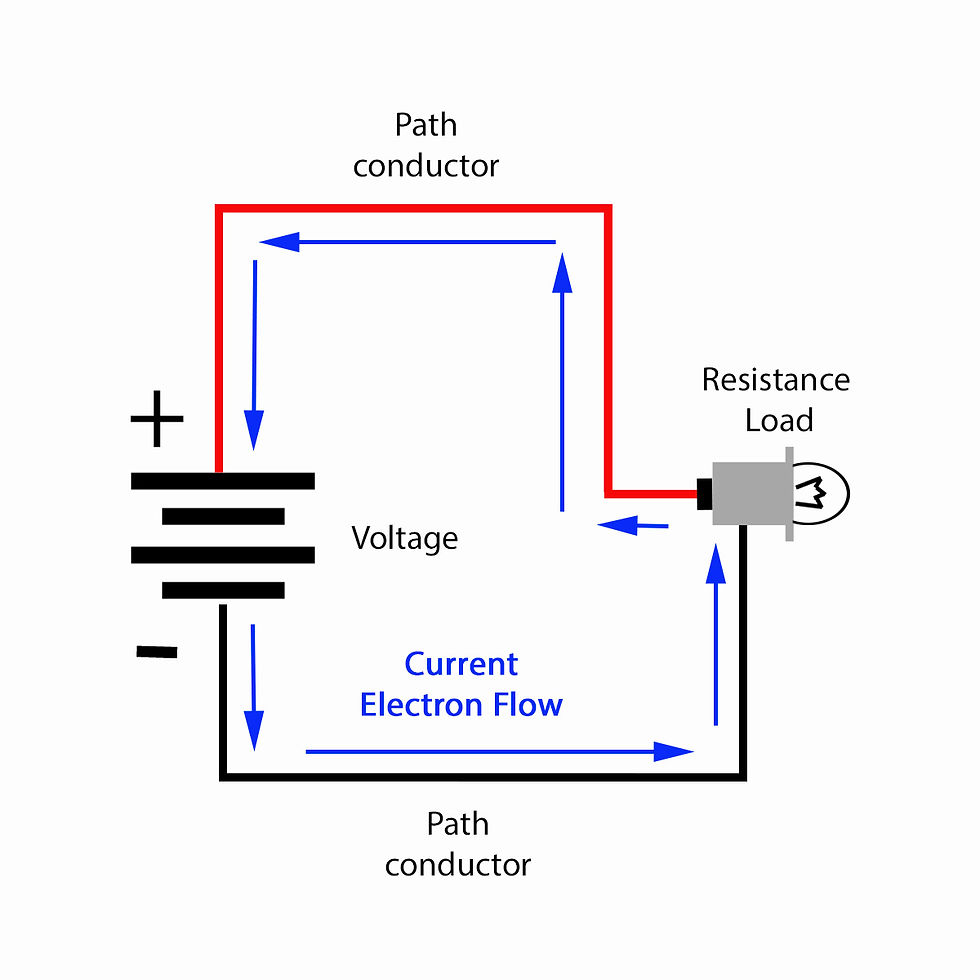
Potential Difference:
The potential difference, or Voltage, represents the difference in electrical potential energy between two points. It’s the force with which electrons are pushed through a conductor, enabling them to do work, or the “pressure” that drives the flow of electrons and is measured in units of volts (V).

Conductive Path:
In electricity, a path for the flow of electricity is called a conductor. An electrical conductor is a material that enables the passage of electricity by allowing free electrons to move easily between atoms when a voltage is applied. Metals are often excellent conductors due to the presence of free electrons in their outer atomic structure. Materials such as silver, gold, copper, and steel are considered optimal conductors and are commonly used in automotive systems.

Resistance, Load, and Ohm's Law:
Resistance is the opposition to the flow of electrons, measured in ohms, while the load is the power required to perform work, measured in watts. An understanding of Ohm's Law helps to clarify this relationship. Resistance in an electrical circuit is the opposition to the flow of current. This opposition is determined by factors such as the conductor's properties, length, cross-sectional area, and temperature. When resistance is high, current flow is limited. Conversely, when resistance is low, the current flow increases. For instance, in incandescent light bulbs, the high resistance in thin filaments causes the current to struggle and generate heat, resulting in the desired outcome: producing light.

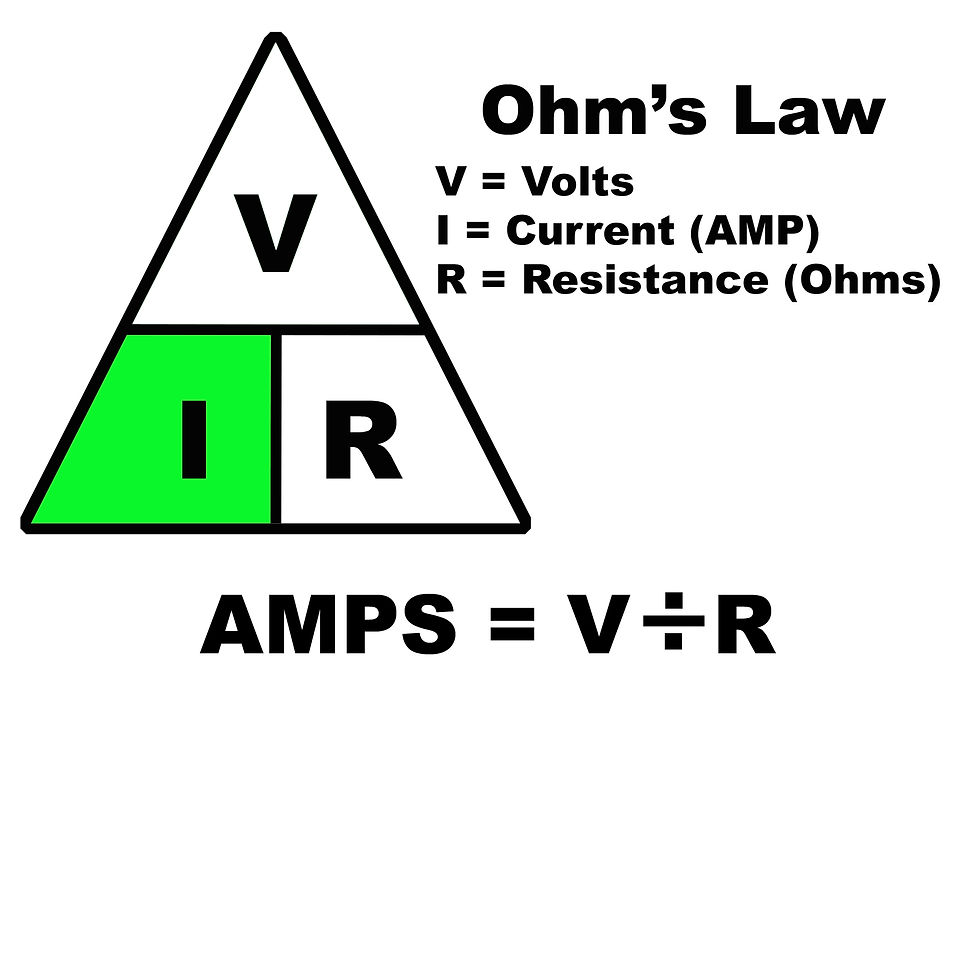
Ohm’s law defines the connection between electric current and potential difference. In most conductors, the current flowing is directly proportional to the applied voltage. This relationship is mathematically expressed as V=IR, where volts equals current
multiplied by resistance.


DC Voltage:
DC voltage, short for Direct Current Voltage, refers to voltage with a consistent polarity that drives current in a single direction through a circuit. This type of voltage can be either constant, where the voltage and polarity remain the same, or variable, where the voltage changes over time while the polarity remains constant. DC voltage is typically sourced from a cell, battery, or DC generator, among others. Because its polarity is unchanging, a DC voltage has a frequency of zero.

Application in Automotive Systems:
In the automotive context, a potential difference is a DC voltage battery, with electrical wires and the metal body/frame serving as conductors. A load can take the form of relays, light bulbs, electrical motors, or coils within the vehicle's electrical system. An automotive battery consists of a plastic case divided into six separate compartments, each serving as a cell. Inside each cell are alternating positive and negative lead plates connected in series, and submerged in a sulfuric acid-and-water solution called the electrolyte. The battery generates electricity through a chemical reaction between the lead plates and the electrolyte, converting chemical energy into electrical energy. The six cells provide about 2.1 volts each, for a total of 12.6 volts when fully charged. When you turn the ignition, a chemical reaction occurs between the electrolyte and the active materials on the lead plates. This reaction causes electrons to flow from the negative plate (anode) to the positive plate (cathode) through an externally connected circuit, creating the electrical current that powers electrical components and discharging the stored energy. The battery can be recharged by reversing the flow of electrons using the car's alternator. This process restores the plates to their original state, enabling them to be used repeatedly.

Automotive Wire:
Automotive wire consists of a copper conductor with two types of insulation: PVC (GPT) and Cross-Linked (TXL, GXL, SXL), which provide good flexibility and withstand the harsh environment of heat and chemical exposure.
PVC, General Purpose Thermoplastic insulation, is often used for general circuit wiring in automotive applications, typically found in the under-hood or cabin. It features highly durable insulation that resists oil, grease, and acids, making it an ideal choice for automotive applications.
Cross-linked automotive wire can withstand higher temperatures and abrasion, providing extra durability and resistance to aging. It’s often used in high-stress applications. They are divided into three different types: TXL, GXL, and SXL.
TXL-type wire features an extra-thin wall thickness, offering excellent heat resistance and flexibility. It is used for general circuit wiring and has a temperature range of -40°C to 125 °C.
GXL-type wire features a thin wall or thickness and is primarily used for vehicles, such as performance cars, trucks, and trailers. GXL has a temperature range of -40°C to 125ºC. GXL has excellent heat resistance and a smaller diameter and lighter weight than Type SXL.
SXL-type wire has a standard wall thickness, excellent heat and abrasion resistance, and is used for general circuit wiring. SXL has a temperature range of -40°C to 125ºC.

Automotive Electrical Components:
All electrical components of an automotive electrical system have defined voltages and resistances, which determine their amperage draw or wattage. The voltage, amperage, or wattage can usually be found on the component itself or in the technical data included in the instructions. This information is crucial in determining the wire size (gauge) and the required fuse protection within the circuit.

Wire Gauge, Length, and Fuse Rating:
To determine the correct wire gauge for an electrical component, several factors must be obtained. First, calculate the total amp draw and measure the total length of the wire. Let's use a radiator cooling fan as an example. The fan is 12V and 120 watts. The positive wire length is 6 feet, and the negative wire length is also 6 feet. To calculate the total amp draw, first divide the watts by volts. 120 / 12 = 10 amps. For a motor, a safety factor of 25% will be calculated. 10 * 1.25 = 12.25 amps. To determine the correct wire gauge, use an automotive wire gauge chart or an online wire size calculator to find the appropriate AWG wire size, ensuring a target voltage drop of 3% or less. As the App indicates, the correct wire is 12 gauge with a 30-amp fuse.

Use the correct size wire for added safety and to prevent overheating. If there is any doubt, using the next larger wire size is on the side of caution. A wire that is too thin for the current it carries will overheat due to increased resistance, potentially leading to a fire. A thicker wire reduces voltage drop, which is the loss of voltage as electricity travels through the wire. Excessive voltage drop can cause a component to malfunction. Using the correct gauge ensures proper power delivery, allowing devices to operate efficiently and reliably.
Before any automotive improvement, you should ensure your vehicle is in top condition through regular maintenance and perform thorough research on your specific model and your upgrade goals. Additionally, consider potential warranty impacts, safety implications, and the time commitment involved. Always consult the manufacturer for proper instructions. The user is responsible for following all instructions. The information is provided "as is," without warranties, and all DIY work is done at the user's own risk. All automotive improvements, repairs, and modifications described in these Materials should be performed by a qualified, licensed, and insured automotive professional or mechanic. The User assumes all responsibility for verifying the credentials of any professional hired. The provider is not liable for any damages, including direct, indirect, or consequential damages, and the user assumes responsibility for any modifications or repairs they undertake.


Comments